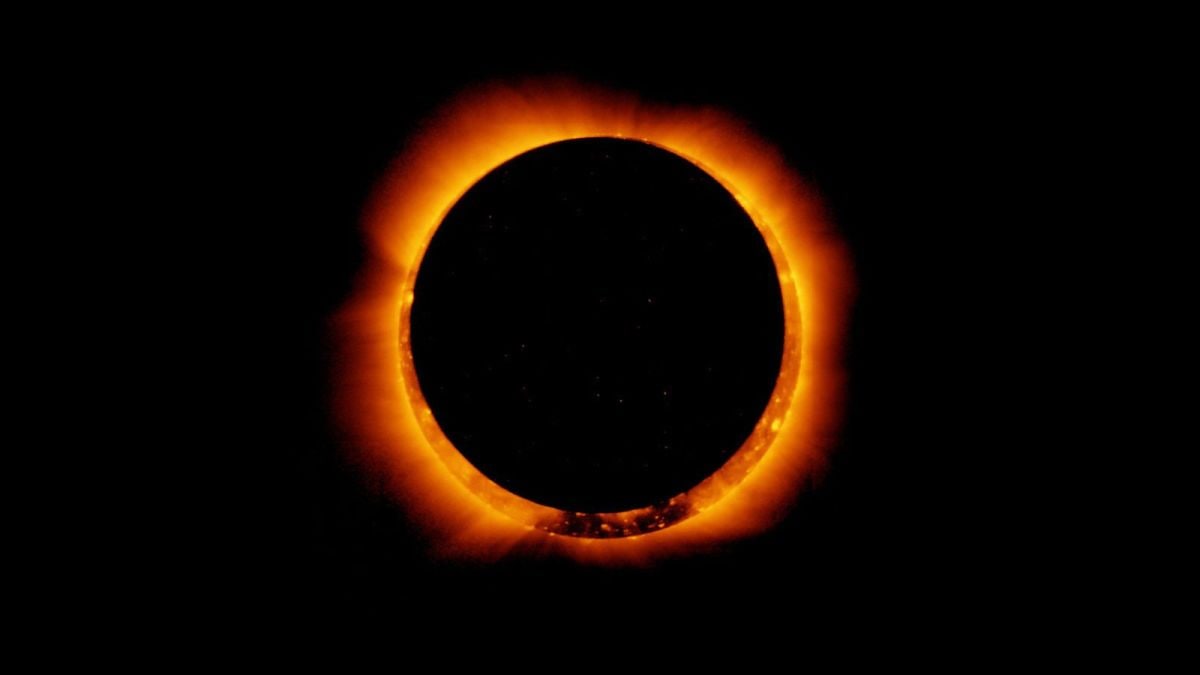
The celestial calendar for 2026 kicks off with a spectacular event as the February 17 Ring of Fire solar eclipse prepares to darken southern skies. This rare annular eclipse occurs when the Moon aligns perfectly with the Sun but fails to cover it completely. The result is a brilliant “halo” of light that transforms the midday sky into a cosmic masterpiece.
The year’s first major astronomical event is not just a treat for stargazers but a significant moment for researchers. While solar eclipses occur annually in various forms, the “annularity” phase—where the moon sits directly in the center of the solar disk—is a visual rarity. On February 17, the world will witness this alignment, though the most pristine views are reserved for the most remote corners of the planet.
Understanding the Mechanics of an Annular Eclipse
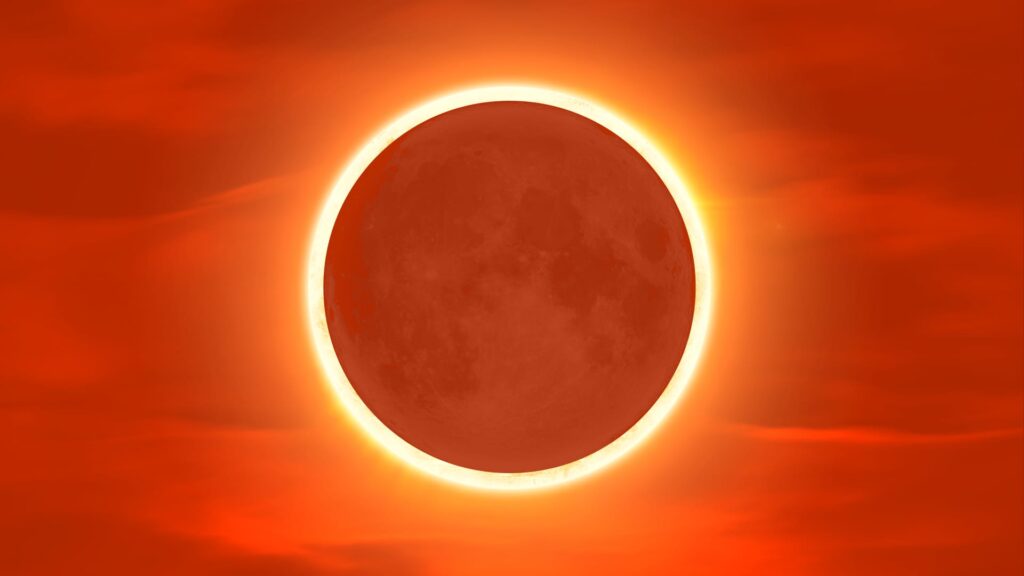
To understand why this is called a “Ring of Fire,” one must look at the elliptical orbit of the Moon. Unlike a total solar eclipse, where the Moon is close enough to Earth to block the Sun entirely, an annular eclipse happens when the Moon is near its “apogee” or farthest point from our planet.
Because the Moon appears slightly smaller in the sky, it leaves the outer edges of the Sun visible. This creates a thin, fiery circle known as the annulus. It is a reminder of the precise, rhythmic clockwork of our solar system, where a few thousand miles of distance change the entire visual experience for Earth-bound observers.
Timing and Peak Visibility of the February 17 Event
According to data from specialized astronomical tracking sites like TimeAndDate, the eclipse will begin its journey at 09:56 UTC. The most critical moment, known as maximum annularity, is expected to occur at 12:12 UTC. The entire process, from the first “bite” taken out of the Sun to the final clearing of the solar disk, will conclude by 14:27 UTC.
While the partial phases of the eclipse last for several hours, the actual “Ring of Fire” duration is fleeting. In the heart of the visibility path, viewers may only have a few minutes to witness the perfect ring before the Moon continues its transit.
Why Antarctica is the Primary Viewing Hub
Geography is the deciding factor for any eclipse, and for the February 17 Ring of Fire solar eclipse, the “best seats in the house” belong to the residents of Antarctica. The path of annularity—a corridor roughly 383 miles wide—will stretch across Western Antarctica and parts of the Southern Ocean near the Davis Sea.
Since this region lacks permanent human cities, the primary witnesses will be colonies of penguins and seasonal researchers stationed at polar outposts. The remote nature of this path means that most of the world will rely on high-tech satellite feeds and live streams from scientific expeditions to see the ring in its full glory.
Partial Visibility in South America and Africa
While the “ring” itself is exclusive to the south pole, a partial solar eclipse will be visible to millions of people elsewhere. Portions of Southern Africa and the southern tip of South America will see the Moon cover a fraction of the Sun.
Countries like South Africa, Namibia, and parts of Argentina may witness a significant partial eclipse. In these regions, the Sun will appear as if a crescent shape has been carved out of it. It is estimated that nearly 176 million people live within the zones where at least a partial phase of the eclipse can be observed, provided the weather remains clear.
Safety Precautions for Solar Observation
Observing any solar event requires strict adherence to safety protocols. Looking directly at the Sun, even during an annular eclipse when 90% of it is covered, can cause permanent eye damage or “eclipse blindness.”
Standard sunglasses, smoked glass, or polarising filters are insufficient. Observers must use ISO-certified solar eclipse glasses or indirect projection methods, such as a pinhole camera. For those using telescopes or binoculars, professional-grade solar filters must be mounted at the front of the device to ensure safety.+2
Future Celestial Events to Watch
If you miss the February 17 event, the next opportunity for an annular eclipse won’t arrive until early 2027. On February 6, 2027, a similar “Ring of Fire” will pass over Chile, Argentina, and several nations in West Africa, including Ghana and Nigeria.
Each of these events provides a unique opportunity for scientists to study the solar corona and the Earth’s ionosphere. For the general public, they serve as a humbling reminder of our place in the universe, as the shadows of celestial bodies dance across our world.
To learn more, follow Shabdsanchi’s social media pages today and stay updated.
- Facebook: shabdsanchi
- Instagram: shabdsanchiofficial
- YouTube: @shabd_sanchi
- Twitter: shabdsanchi