



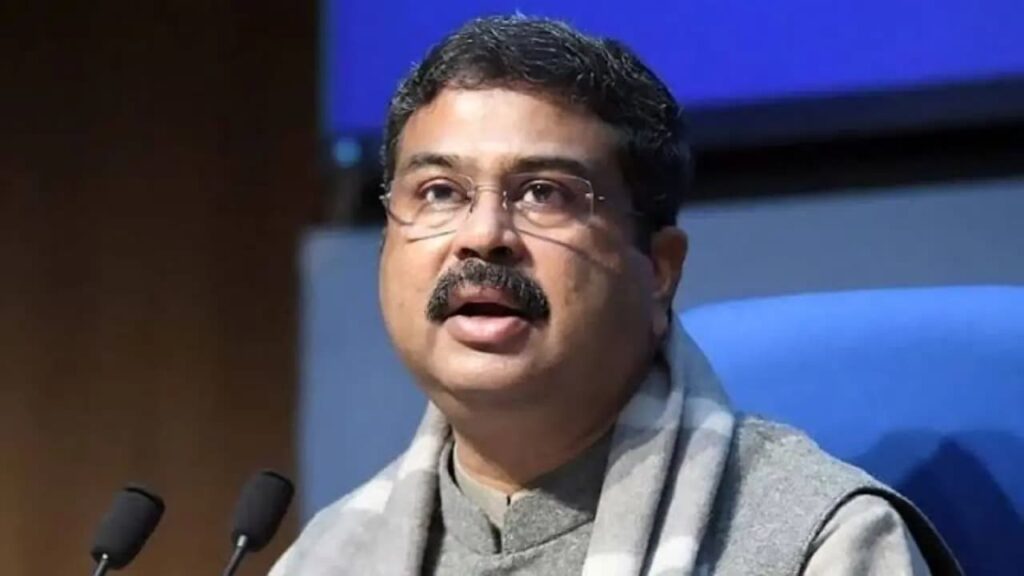
In a historic political development, Union Education Minister Dharmendra Pradhan tendered his resignation to Prime Minister Narendra Modi. The decision follows weeks of escalating nationwide youth demonstrations sparked by systemic paper leak scandals surrounding national entrance examinations.
The resignation marks one of the most prominent cabinet concessions under the Narendra Modi administration. For over a month, tens of thousands of students, led by youth organizations like the Cockroach Janta Party (CJP) and various student unions, occupied central gathering points—most notably Delhi’s Jantar Mantar—demanding structural reform, systemic accountability, and the immediate removal of the top education leadership.
Breaking Down the Resignation: What Led to the Surrender?
Dharmendra Pradhan Submits Resignation to PM Modi
Posting an official statement on social media, Dharmendra Pradhan confirmed that he had submitted his resignation letter to Prime Minister Narendra Modi. Pradhan stated that the ongoing turmoil and unrest among the youth deeply saddened him.
In his public statement, Dharmendra Pradhan noted that stepping down was “not a matter of personal prestige,” emphasizing that his primary goal was to ensure that the academic future of millions of students is not compromised by legal entanglements, administrative friction, or political exploitation.
“From the very first day, I took responsibility for the matter and never turned away from this situation,” Dharmendra Pradhan stated, reiterating that the step was taken in the broader interest of India’s students and the integrity of national institutions.
Moral Responsibility vs. Political Pressure
While official channels emphasize that Dharmendra Pradhan stepped down voluntarily to maintain the dignity of the office, political observers point out that the government faced unprecedented pressure. With a third round of talks scheduled between student representatives and Union government emissaries, youth leaders had made the exit of Dharmendra Pradhan an absolute, non-negotiable prerequisite.
┌────────────────────────────────────────────────────────────────────────┐
│                   TIMELINE OF THE EDUCATION CRISIS                     │
├────────────────────────────────────────────────────────────────────────┤
│ 1. May/June: Widespread irregularities & NEET paper leak allegations.  │
│ 2. Late June: Mass student mobilization begins across major cities.    │
│ 3. July: Protests consolidate at Jantar Mantar under youth banners.    │
│ 4. Mid-July: Clashes during Parliament march heighten urgency.         │
│ 5. July 25: Dharmendra Pradhan tenders resignation to PM Modi.         │
└────────────────────────────────────────────────────────────────────────┘
The Genesis of the Crisis: NEET Paper Leak Scandals
Systemic Vulnerabilities in National Examinations
The root cause of the uproar lies in allegations of widespread paper leaks and scoring irregularities during major competitive entrance examinations, particularly the National Eligibility cum Entrance Test (NEET-UG). The examination, which determines admission to medical institutions across India, serves as a critical gateway for over two million candidates annually.
Reports of compromised paper security, inflated top scores, and alleged involvement of examination mafias triggered intense anger across the country. As minister overseeing the Ministry of Education, Dharmendra Pradhan found himself at the center of growing public frustration regarding the operational integrity of the National Testing Agency (NTA).
Impact on Millions of Medical Aspirants
For millions of young aspirants who invest years of rigorous preparation into competitive exams, irregularities represent a direct threat to meritocracy. The sense that hard work was being undermined by systemic corruption created widespread discontent, quickly expanding from academic forums to street demonstrations.
Rise of the ‘Cockroach’ Movement: How Youth Resistance Forced a Reset
Mobilization at Jantar Mantar and Beyond
What began as scattered student grievances rapidly transformed into a cohesive, highly organized youth agitation. A major catalyst in the demonstrations was the Cockroach Janta Party (CJP), a youth-led movement founded by student leader Abhijeet Dipke. Using satirical symbolism alongside sharp political advocacy, the movement mobilized students across urban and rural educational centers.
Protesters adopted the “Cockroach” moniker as a metaphor for resilience—symbolizing an ordinary class of citizens who refuse to be crushed by bureaucratic oversight or administrative indifference.
Escalation, Clashes, and Non-Negotiable Demands
As the movement gathered momentum, Delhi’s Jantar Mantar became the epicenter of daily rallies. Tensions spiked during a march toward Parliament, resulting in sharp confrontations with law enforcement and numerous injuries among both protesters and police personnel.
Despite government efforts to defuse tensions through departmental reviews and investigation panels, youth leaders maintained three core demands:
- The immediate resignation of Union Education Minister Dharmendra Pradhan.
- A complete structural overhaul and independent audit of the National Testing Agency (NTA).
- Legally binding safeguards against paper leaks, along with transparent re-examination protocols.
When news of the exit of Dharmendra Pradhan broke at Jantar Mantar, crowds celebrated it as a significant victory for student-led democratic action.
Political Impact on the Modi Government
A Rare Cabinet Concession
The resignation of Dharmendra Pradhan represents a rare moment where public street demonstrations directly led to the departure of a high-profile Cabinet Minister in the ruling administration. Having served as Education Minister since 2021 and previously holding key portfolios such as Petroleum and Steel, Dharmendra Pradhan has been a prominent figure in the Bharatiya Janata Party (BJP).
| Key Highlights of Dharmendra Pradhan’s Ministerial Portfolio | Details |
| Union Minister of Education | July 2021 – July 2026 |
| Minister of Skill Development & Entrepreneurship | 2017 – 2024 |
| Minister of Petroleum and Natural Gas | 2014 – 2021 |
| Lok Sabha Constituency | Sambalpur, Odisha |
| Primary Trigger for Exit | NEET paper leak outrage & CJP protests |
Opposition Pressure and Parliamentary Standoffs
The student movement quickly found support across opposition parties, escalating the issue into a major parliamentary issue. Opposition leaders demanded accountability from the highest levels of executive authority, staging protests outside official residences and disrupting parliamentary proceedings.
By accepting the resignation of Dharmendra Pradhan, the central government seeks to de-escalate political friction and open a path toward constructive dialogue with student delegations.
What Lies Ahead for India’s Education System?
Reforming the National Testing Agency (NTA)
With Dharmendra Pradhan stepping down, public attention now shifts toward long-term policy solutions. The primary mandate for incoming leadership will be reconstructing the credibility of national entrance testing. Key policy changes under consideration include:
- Decentralization of Exam Management: Transitioning toward hybrid or localized testing models to reduce single-point vulnerabilities.
- Strict Penal Measures: Enforcing stringent legal frameworks against paper leak networks and exam clearance syndicates.
- Independent Oversight Committees: Establishing statutory student-teacher oversight panels to monitor test development and security.
Restoring Faith Among India’s Youth
The ultimate test for the Ministry of Education will be restoring faith among young aspirants. Beyond ministerial changes, India’s youth are seeking structural guarantees that competitive examinations will remain fair, transparent, and uncompromised.
Frequently Asked Questions (FAQs)
Why did Dharmendra Pradhan resign as Education Minister?
Dharmendra Pradhan resigned following widespread nationwide protests led by student organizations over allegations of exam paper leaks, particularly surrounding the NEET-UG entrance tests. He stated he was taking moral responsibility while seeking to protect student interests.
What was the ‘Cockroach’ protest movement?
The ‘Cockroach’ protest movement, spearheaded by youth groups like the Cockroach Janta Party (CJP), was a student-led agitation that mobilized thousands at Delhi’s Jantar Mantar. The movement used the symbol to represent resilient citizens fighting against bureaucratic corruption and paper leaks.
Who was leading the student protests against Dharmendra Pradhan?
The protests were led by various youth leaders and student groups, prominently including Abhijeet Dipke of the Cockroach Janta Party (CJP), along with broad student coalitions across major Indian cities.
What happens to the NEET exam process after Dharmendra Pradhan’s exit?
While the exit of Dharmendra Pradhan addresses key political demands, operational decisions regarding re-examinations, NTA restructuring, and security protocols will be led by the newly appointed education ministry leadership in consultation with judicial and expert committees.
Conclusion
The resignation of Dharmendra Pradhan marks a major turning point in modern Indian student politics. By taking responsibility amid growing public outrage, Dharmendra Pradhan has vacated office, opening space for administrative reform in the education sector. As the government moves to restore order and reform testing protocols, the event stands as a clear reminder of the power of youth-driven civic engagement in demanding accountability and institutional integrity.
For more information, follow Shabdsanchi‘s social media pages today and stay updated.
- Facebook: shabdsanchi
- Instagram: shabdsanchiofficial
- YouTube: @shabd_sanchi
- Twitter: shabdsanchi