




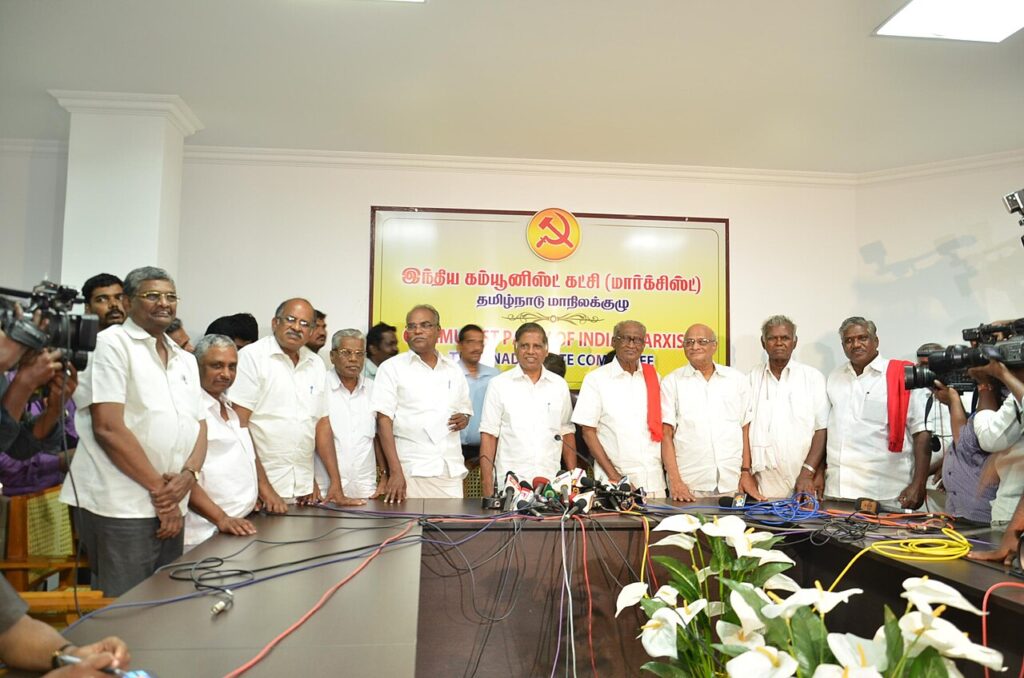
The Himachal Pradesh unit of the Communist Party of India (Marxist) has announced an intensive statewide campaign starting March 9. This mobilization serves as a precursor to a massive national rally scheduled for March 24 in Delhi. The party aims to highlight grievances regarding international trade agreements and domestic policy shifts affecting the state’s agrarian economy.
Strategic Meeting in Shimla
The decision was finalized during a high-level state committee meeting held at the party’s Shimla headquarters. Presided over by Onkar Shad, the session saw participation from key ideological leaders, including Central Secretariat member Vikram Singh. The leadership deliberated on the intersection of international trade dynamics and their localized impact on the Himalayan state.
State Secretary Sanjay Chauhan confirmed that over 1,000 delegates from Himachal Pradesh would join the Delhi protest. The party is positioning itself against what it describes as “anti-people” frameworks that prioritize corporate interests over small-scale producers.
Key Issues: From FTAs to Labor Codes
A significant portion of the statewide campaign will focus on Free Trade Agreements (FTAs) involving New Zealand and the European Union. The CPI(M) alleges that these deals, alongside specific trade tariffs from the United States, pose an existential threat to local farmers and industrial workers.



The party expressed deep concern over the four new labor codes and the Electricity Amendment Bill 2025. They argue these legislative changes systematically dismantle worker protections and pave the way for aggressive privatization in the power sector, which could affect nearly 50,000 employees and pensioners in the state.
Impact on Himachal’s Apple Economy
The fruit-growing belt of Himachal Pradesh remains the party’s primary focus. With an economy valued at approximately ₹5,500 crore, the horticulture sector contributes nearly 13% to the State Domestic Product (GSDP). The CPI(M) claims that current trade policies could push three lakh families—cultivating apples, pears, and kiwis—into severe financial distress.
“Lowering import barriers or entering lopsided trade deals directly hits the price realization of our local orchardists,” Chauhan stated. The party also criticized the Seed Bill and the alleged move to weaken MGNREGA, which currently supports 2.8 million beneficiaries across the state’s rural landscape.
Route and Schedule of the March
The grassroots outreach will begin with a ten-day village-level drive, followed by a physical march. The statewide campaign is set to commence from Paonta Sahib on March 9. It will traverse through several key districts before concluding with a grand assembly in Shimla on March 19.
The itinerary includes public meetings and “nukkad nataks” (street plays) in the following locations:
- Lower Himachal: Kangra (Mand area), Khundian, Dharamshala, and Una.
- Central Belt: Kullu, Balichowki, Jogindernagar, and Sarkaghat.
- Upper Himachal: Rohru, Rampur, Tapri, and Ani.
- Final Leg: Solan, Bilaspur, and Shimla.
Financial Concerns and Infrastructure
The party leadership also raised alarms regarding the discontinuation of the revenue deficit grant for Himachal Pradesh. They argue that this fiscal shift severely constrains the state’s ability to pay salaries and pensions. Furthermore, the mandatory installation of smart meters has been labeled as an additional financial burden on consumers that will eventually lead to the withdrawal of electricity subsidies.
By integrating cultural performances and street-corner meetings, the CPI(M) hopes to simplify complex economic issues—like the “V.B. Gram G Scheme”—for the general public. The goal is to build a cohesive narrative of resistance that links local agrarian struggles with national economic policies ahead of the March 24 Delhi congregation.
To learn more, follow Shabdsanchi’s social media pages today and stay updated.
- Facebook: shabdsanchi
- Instagram: shabdsanchiofficial
- YouTube: @shabd_sanchi
- Twitter: shabdsanchi