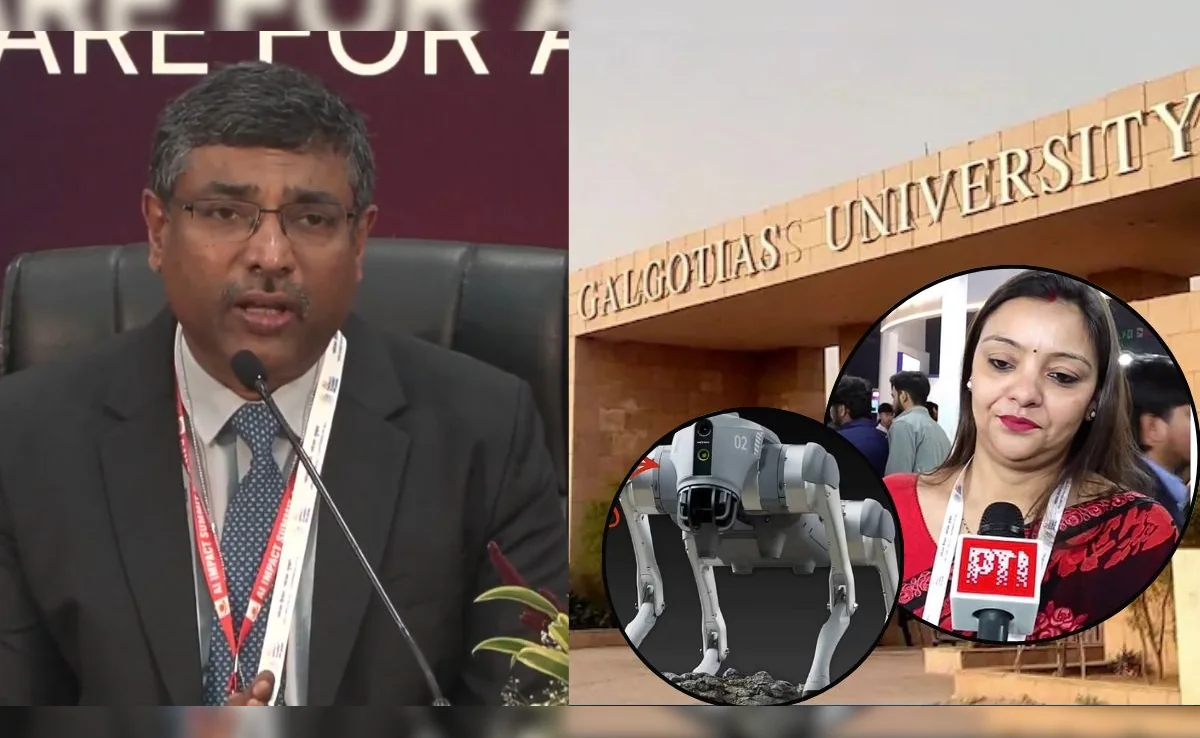
The Ministry of Electronics and Information Technology (MeitY) has officially addressed the Galgotias University robotic dog controversy following a viral incident at the India AI Impact Summit 2026. Government officials stated that while innovation is encouraged, the integrity of public exhibitions must be maintained through factual representation and a strict code of conduct for all participants.
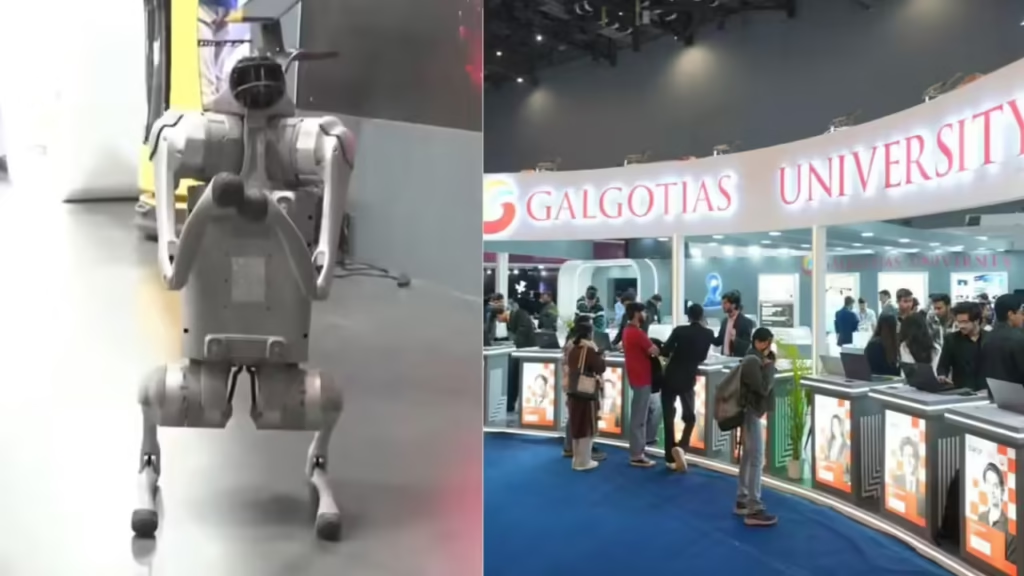
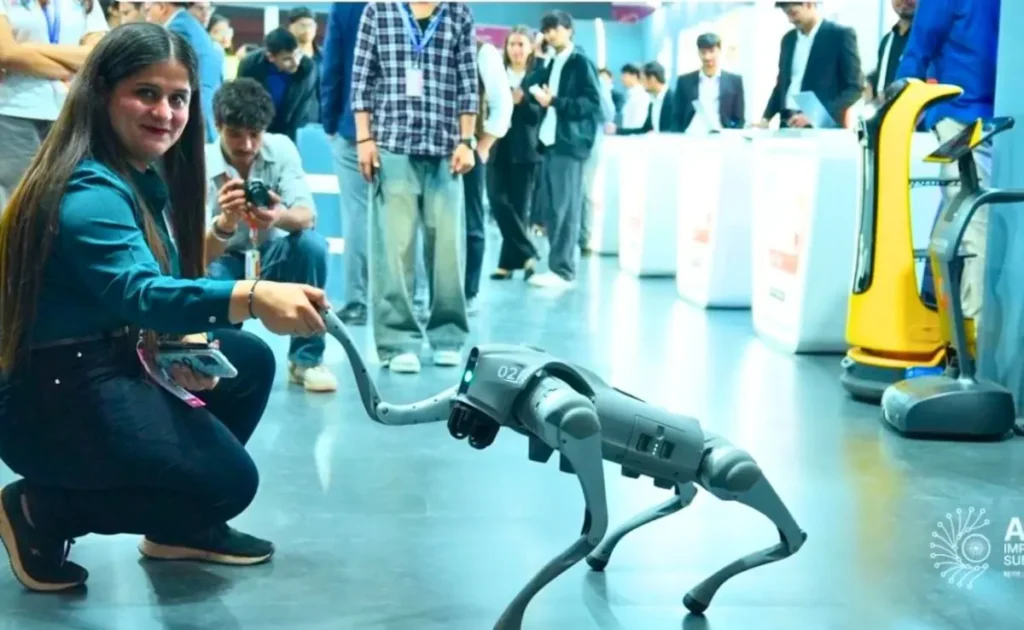
The India AI Impact Summit 2026, intended to be a showcase of indigenous technological prowess, recently found itself at the center of a social media storm. The focal point of this debate was a quadruped robot displayed at the Galgotias University pavilion. What was initially presented as a product of the university’s internal “center of excellence” was quickly identified by tech enthusiasts as a commercially available model from a Chinese robotics firm.
Understanding the Galgotias University Robotic Dog Controversy
The issue gained momentum after Neha Singh, a professor of communications at the university, gave a televised interview claiming the robot, named “Orion,” was an in-house development. However, observers pointed out that the machine was a Unitree Go2, a well-known product of China-based Unitree Robotics. The discrepancy between the professor’s claims and the visible branding on the device led to immediate backlash on digital platforms.
The Centre’s reaction, delivered by MeitY Secretary S Krishnan, reflects a growing concern over the authenticity of academic contributions in national forums. Krishnan emphasized that while the government does not intend to “stifle innovation” by over-regulating every exhibit, there is an inherent expectation of honesty. He noted that since these exhibits are for demonstration rather than sale, they do not undergo rigorous certification, placing the burden of truth on the exhibitors.
The “Six and Nine” Defense
In the wake of the criticism, Professor Singh attempted to clarify her statements, attributing the confusion to high energy and a lack of eloquence during the interview. She argued that the university never intended to hide the robot’s origins, as the original branding remained intact. However, her metaphorical defense—suggesting that “your six can be my nine”—only served to fuel further mockery online, with many interpreting it as a dismissal of objective facts.
The university administration eventually distanced itself from the professor’s comments. In a formal apology, the institution labeled Singh as “ill-informed” and claimed she was unauthorized to speak to the press. By then, the organizers of the Summit had already requested the university to vacate their pavilion, a move that highlighted the seriousness with which the Ministry views potential misinformation in the tech sector.
Implications for Academic Integrity
This incident raises broader questions about how educational institutions represent their research and development efforts. For a “Center of Excellence” to be associated with a simple procurement and rebranding exercise—even if unintentional—damages the credibility of the Indian private education sector. The Centre has signaled that a “set code” must be followed to ensure that genuine work is reflected in future expos.
The Ministry’s stance remains firm: misinformation cannot be encouraged, especially in sectors as critical as Artificial Intelligence and Robotics. While the government remains committed to fostering a startup-friendly ecosystem, it expects participants to uphold the standards of “academic integrity and transparency” that Galgotias University now claims to champion in its remedial statements.
Government Policy on Non-Commercial Exhibits
S Krishnan’s remarks also shed light on why such a lapse occurred in the first place. Currently, products meant for public distribution or sale require strict certification. However, demonstration models are often taken at face value. The Galgotias University robotic dog controversy may prompt a re-evaluation of how participants are vetted for high-profile government-backed events to prevent similar embarrassments in the future.
The university has since vacated the premises and issued a plea for the public to view the incident as an isolated communication failure rather than a systemic attempt at fraud. As the India AI Impact Summit 2026 concludes, the conversation has shifted from the capabilities of AI to the ethics of its representation.
To learn more, follow Shabdsanchi’s social media pages today and stay updated.
- Facebook: shabdsanchi
- Instagram: shabdsanchiofficial
- YouTube: @shabd_sanchi
- Twitter: shabdsanchi