




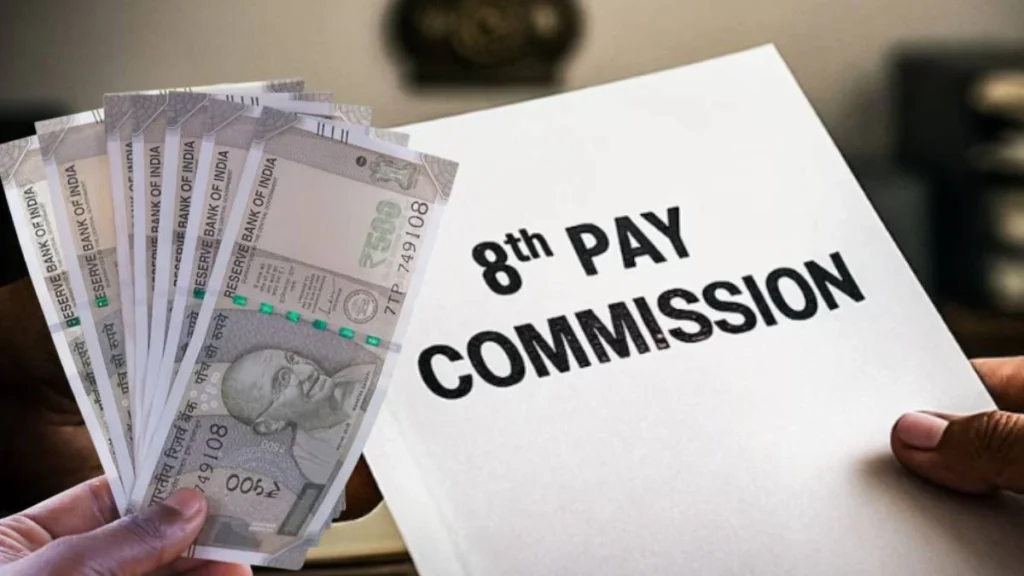
Since the initial steps toward setting up the 8th Pay Commission (8th CPC), millions of central government employees and pensioners across India have closely tracked its progress. To frame balanced recommendations, the Commission is conducting pan-India on-the-ground consultations with various stakeholder groups. Turning a vital page in its schedule, the Commission’s panel held an essential two-day consultative meeting in Lucknow on June 22 and 23, 2026.
During this session, central employee unions, state-level associations, and pensioner bodies presented their financial demands, anomalies, and structural concerns directly to the panel. Following this Lucknow visit, calculations regarding prospective salary trajectories and enhanced post-retirement security have gained immense momentum.
Why Did the 8th Pay Commission Team Gather in Lucknow?
Operating under the leadership of its chairperson, the 8th Pay Commission is collecting grass-roots data to resolve regional wage disparities and evaluation friction. Following previous high-profile rounds in Delhi, Hyderabad, Srinagar, and Ladakh, the Lucknow visit serves as a highly strategic stop. Uttar Pradesh holds a massive concentration of active central government workers alongside thousands of defense, railway, and postal department pensioners.
The fundamental objective of this two-day meet was to gather feedback regarding current allowances, fitment anomalies, and retirement benefits. Given the sustained impact of macro inflation on daily living costs, employee representatives strongly advocated for a pragmatic, dignified upward wage adjustment.
Read Also: Maharashtra Politics: Massive Blow to Shiv Sena UBT as 6 Uddhav Camp MPs Join Eknath Shinde
The Math Behind the Fitment Factor: How It Drives Basic Salary Growth
The true metric deciding any paycheck revision under a new pay commission is the Fitment Factor. This factor acts as a multiplier applied to an employee’s existing basic pay to calculate their newly revised base salary.
Under the current 7th CPC framework, the minimum basic salary stands at ₹18,000, calculated via a .257 fitment factor. Based on the formal representations made during the Lucknow consultations, three primary financial projection paths emerge:
1. The Conservative Scenario (2.28x)
Should the central government prioritize strict fiscal consolidation and structural budgetary discipline, a conservative multiplier around 2.28 might be adopted. This mechanism would bump the baseline minimum pay from ₹18,000 to approximately ₹41,000.
2. The Moderate/Expected Scenario (2.57x to 3.00x)
Financial analysts and policy watchers anticipate that the administration will likely balance employee sentiment with economic reality by moving the multiplier up to 3.00 times. If a 3.00 fitment factor is implemented, the entry-level basic pay would sit firmly at ₹54,000, sparking a major increase in net in-hand earnings.
3. The Aggressive Employee Union Demand (3.83x)
Citing increased urban living indices, certain influential employee unions pushed for an aggressive fitment adjustment up to 3.83. If this proposal is accepted—though fiscal practicalities suggest this remains a steep climb—the starting base pay would theoretically jump to ₹69,000.
7th CPC vs. 8th CPC: Projected Pay-Matrix Comparison
The following dataset maps out how a balanced adjustments model (accounting for baseline conservative-to-moderate adjustments) would scale basic salaries across different pay-matrix hierarchies:
| Pay Matrix Level | 7th CPC Basic Salary | Projected 8th CPC Range (Estimated) | Typical Core Positions |
| Level 1 | ₹18,000 | ₹32,000 – ₹41,000+ | Group ‘C’ Entry Level, MTS |
| Level 2 | ₹19,900 | ₹36,000 – ₹45,000+ | Lower Division Clerk (LDC) |
| Level 6 | ₹35,400 | ₹64,000 – ₹80,000+ | Sub-Inspector, Superintendent |
| Level 10 | ₹56,100 | ₹1.02 Lakh – ₹1.28 Lakh+ | Group ‘A’ Entry (IAS, Military Officers) |
| Level 15 | ₹1,82,200 | ₹3.64 Lakh – ₹4.15 Lakh+ | Additional Secretary (GoI) |
| Level 18 | ₹2,50,000 | ₹5.00 Lakh – ₹5.70 Lakh+ | Cabinet Secretary / Chief of Army Staff |
Important Note: These metrics represent statistical projections based on consultative demands. The final payroll structures become official only after the Union Cabinet reviews, edits, and explicitly notifies the commission’s final draft. Furthermore, upon implementation, the accumulated Dearness Allowance (DA) resets to zero as it gets integrated directly into the updated basic pay.
Pension Revisions: Key Proposals and Expectations
Alongside serving workers, pension associations turned out in full force during the Lucknow rounds. With nearly 65 to 69 lakh central pensioners awaiting finality, the restructuring of post-retirement income is a focal point of these sessions. The minimum baseline pension is currently fixed at ₹9,000.



The key adjustments proposed by pensioner welfare associations include:
- Upward Minimum Pension Shift: Demands were lodged to raise the absolute lowest pension slab to anywhere between ₹20,000 and ₹25,000, depending on the final multiplier.
- 67% of Last Pay Drawn (LPD): Associations made a case to peg base pension payouts at 67% of the Last Pay Drawn, shifting away from the existing 50% benchmark.
- Reduced Commuted Pension Period: Representatives requested that the commuted portion of pension payouts be restored after 10 to 12 years, lowering it from the current 15-year rule.
Age-Based Additional Pension Structure
Recognizing heightened health complications and medical inflation associated with advanced aging, pensioners’ bodies submitted a structured progressive aging benefit grid:
| Pensioner’s Current Age | Proposed Pension Level |
| 65 Years | 70% of Last Pay Drawn |
| 70 Years | 75% of Last Pay Drawn |
| 75 Years | 80% of Last Pay Drawn |
| 80 Years | 85% of Last Pay Drawn |
| 85 Years | 90% of Last Pay Drawn |
| 90 Years and Above | 100% of Last Pay Drawn |
Implementation Timelines and the Status of Retroactive Arrears
Historically, central pay commissions operate on a 10-year cyclical window. Following this schedule, the theoretical date of effect for the 8th Pay Commission shifts back to January 1, 2026. However, because the commission’s panel was granted an extended 18-month duration from late 2025 to submit its definitive report, the final submission is projected around mid-2027.
Will this timeline delay cause financial losses for beneficiaries?
No, it will not. Administrative and legal experts verify that even if final documentation, executive scrutiny, and cabinet nods cross into subsequent calendar quarters, the provisions will apply retrospectively from January 1, 2026. This ensures that when implementation rolls out, active employees and pensioners receive a consolidated, lump-sum payout of all retroactive Arrears. For higher matrix tiers (Levels 15 to 18), these backdated clearances could amount to substantial sums.
FAQs (Frequently Asked Questions)
Q1. When did the 8th Pay Commission Lucknow meeting occur, and why does it matter?
Ans. The consultation round took place on June 22 and 23, 2026. It holds immense weight because Uttar Pradesh represents a vast demographic baseline for active and retired central personnel, giving local unions a direct channel to log their operational issues with the panel.
Q2. What is the projected entry-level minimum basic pay under the 8th CPC?
Ans. The current basic starting pay is ₹18,000. Depending on whether the Union Cabinet approves a conservative 2.28x or an optimistic 3.00x fitment factor, the new minimum basic pay is projected to settle between ₹41,000 and ₹54,000.
Q3. Will retired individuals see a real increase in their minimum pensions?
Ans. Yes. The 7th CPC positioned the entry-level minimum pension at ₹9,000. Applying the updated fitment factor targets could push this floor up past the ₹20,500 threshold.
Q4. Are backdated arrears guaranteed if the commission’s report is delayed?
Ans. Yes. Because the official baseline operational milestone is anchored to January 1, 2026, any intermediate administrative delay will be compensated via retrospective arrears when the final payout policy goes live.
Q5. What exactly does the term ‘Fitment Factor’ imply?
Ans. The fitment factor is a standardized mathematical multiplier utilized to scale pay frameworks smoothly across transitions, multiplying old base salaries into updated, higher pay-commission values.
Conclusion
The recent Lucknow deliberations demonstrate that the 8th Pay Commission is actively prioritizing ground-level metrics and diverse union testimonies. While active personnel are keeping their focus on maximizing their fitment factor, pensioner blocks are centering their efforts around long-term health safety and equitable pension rules.
Ultimately, the responsibility rests with the commission and the central government to strike a sustainable balance between fulfilling employee aspirations and managing the nation’s fiscal health. Until the final recommendations are officially reviewed, tracking these cyclical updates remains essential for all stakeholders.
For more information, follow Shabdsanchi‘s social media pages today and stay updated.
- Facebook: shabdsanchi
- Instagram: shabdsanchiofficial
- YouTube: @shabd_sanchi
- Twitter: shabdsanchi